


 FP1838 : IMPACT OF SCREEN TIME ON OCULAR SURFACE IN CHILDREN
Dr. SONALI RAO
Dr.Rama Devi K S
Abstract
To evaluate the effect screen-time on ocular surface in children.
Children attending OPD from September 2019 to October 2020, in the age group of 5 to 15 years (78 subjects) were included
Subjects were classified as, <1 hour of smart-phone use with< 3 hours of other media(Control group 1),< 1 hour of smart-phone use with > 3 hours of media(Control group 2), 1 to 4 hours of smart-phone use with < 3 hours of media(Study group 1), 1 to 4 hours of smart-phone use with >3 hours of media(Study group 2) and > 4
hours of smart-phone use(Study group3)
70.5% had headache, burning sensation and watering, which was more in study group 2 and 3. Average OSDI score increased as the screen time increased(p<0.001) . Mean TBUT decreased as screen time increased. Positive fluorescein staining was noted in 7.7%. None of the subjects had a Schirmer value less than 10mm in either of the eyes. Increased screen time could be an important risk factor for dry eye symptoms in pediatric population.
Full Text
The average duration of daily media consumption has increased in today’s paediatric age group. The use of smartphones and tablets have become the new normal for a majority of them. Increased use of these devices often lead to a variety of asthenopic symptoms. However, the paediatric population is more tolerant to these symptoms compared to adults and many of them go undiagnosed. As such there is a strong need for a uniform protocol to screen for dry eye disease irrespective of symptoms.
Purpose
To evaluate the impact of electronic media use on ocular surface health in children. The study design was cross sectional observational study with purposive sampling. Children attending OPD from September 2019 to October 2020, in the age group of 5 to 15 years, who were using appropriate spectacle correction were included in the study. Exclusion criteria were children with (1) congenital abnormalities of the eye, (2) autoimmune diseases, (3) prior history of ocular surgery or trauma, (4) any pre-existing morbid ocular conditions, (5) severe allergy or severe dryness secondary to systemic illness.
A total of 78 children were included in the study. All of the children underwent comprehensive ophthalmic evaluation including best corrected visual acuity tests, biomicroscopic evaluation to detect problems of eyelids, conjunctiva and cornea. Dry eye evaluation included Schirmer testing, tear break up time and fluorescein staining. OSDI scoring was included along with the questionnaire to obtain information about pattern and duration of electronic media use and possible dry eye symptoms.
Based on the duration of screen time, the participants were categorized into 3 main groups.
A) Those with less than 1 hour of smartphone use were included in the control group. It had two subgroups with Control group 1 having less than 3 hours of other media and control group 2 having more than 3 hours of other media. B) Those with more than 1 hour of smartphone use were included in the study group. Those with less than 3 hours of other media were in study group 1 and those with more than 3 hours of other media were included in study group 2. And C) study group 3 included those with more than 4 hours of smartphone use.
RESULTS
A total of 78 children were included in the study with a mean age of 11.27±2.96. 57.70% of the study population were males. [Fig 1] Nearly 95% of the study population used smartphones with 19.2% having access to computers and television along with smartphones.
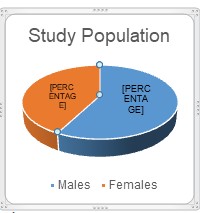
Figure 1
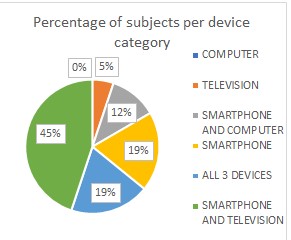
Figure 2
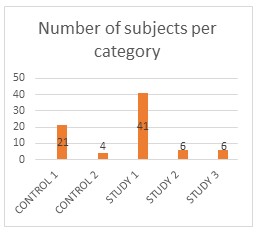
Figure 3
70.5% of the study population had symptoms like headache, watering, blurring of vision and burning sensation with headache being the commonest. It was observed that the percentage of symptoms increased with screen time.
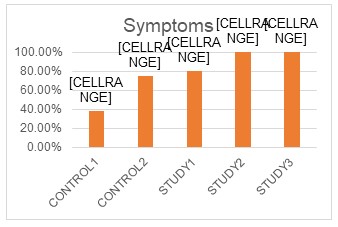
Figure 4
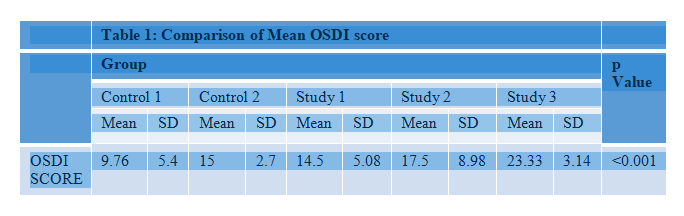
The OSDI score of more than 12 was noted in 57.7% of the population. The mean increase in OSDI score from short screen time to long screen time groups showed a statistically significant change (p<0.0001).
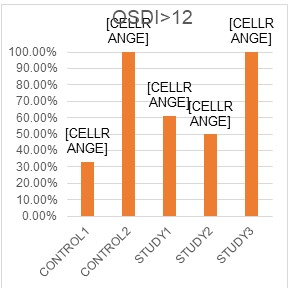
Figure 5
Table 1: Comparison of Mean OSDI score
While none of the participants in the study showed a schirmer value less than 11, the mean value showed a decreasing trend as the duration of screen time increased.
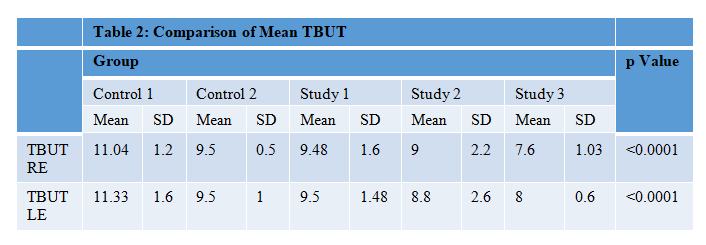
Tear break up time showed a statistically significant decrease from short screen time groups to long screen time groups(p<0.0001). Study group 3 showed a TBUT less than 10 seconds for all its members.
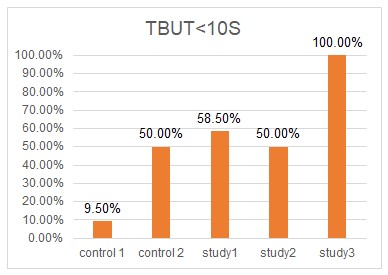
Figure 6
Positive fluorescein staining was noted in 7.7% of the population and showed a positive correlation with smartphone screen time.
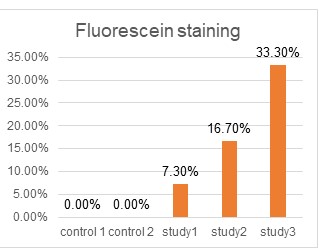
Figure 7
DISCUSSION
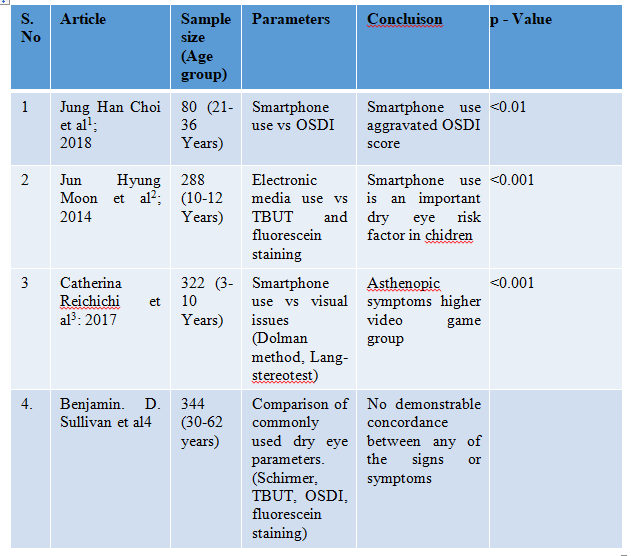
A review of relevant literature shows other studies comparing electronic media use and ocular surface health.
CONCLUSION
Our study showed that a significant portion of the study population had symptoms. While the results did not indicate severe disease, both the OSDI and TBUT values showed a significant change as duration of screen time increased. Fluorescein staining was higher in groups with high media use; however, the result was not statistically significant. In this generation of ever-increasing dependency on electronic media devices, both the children and parents need to be made aware of its ill effects. As such studies like these that compare the direct effects of screen time on ocular surface health become even more important. The small sample size and limited duration of study was a limitation in our study. However, it still shows that there is a need for more holistic diagnostic policies that can diagnose dry eye disease before their symptomatic manifestation.
REFERENCES
1. Choi JH, Li Y, Kim SH, Jin R, Kim YH, Choi W, et al. The influences of smartphone use on the status of the tear film and ocular surface. Taylor AW, editor. PLoS ONE. 2018 Oct 31;13(10):e0206541.
2. Moon JH, Lee MY, Moon NJ. Association between video display terminal use and dry eye disease in school children. J Pediatr Ophthalmol Strabismus. 2014 Apr;51(2):87–92.
3. Rechichi C, De Mojà G, Aragona P. Video Game Vision Syndrome: A New Clinical Picture in Children? J Pediatr Ophthalmol Strabismus. 2017 Nov 1;54(6):346–55.
4. Sullivan BD, Crews LA, Messmer EM, Foulks GN, Nichols KK, Baenninger P, Geerling G, Figueiredo F, Lemp MA. Correlations between commonly used objective signs and symptoms for the diagnosis of dry eye disease: clinical implications. Acta ophthalmologica. 2014 Mar;92(2):161-6.
Leave a Comment